January 3, 2026
- Updated entry rules: most nationalities now enjoy visa-free entry for up to 90 days (through early 2026)
- Added specific pre-arrival visa list and requirements for nationals of nine countries (e.g., Dominican Republic, Cuba, Iran)
- Included concrete fees and document amounts: $10 airport tourist card, $25 embassy visa fee, HTG 7,500 deposit and HTG 5,000 residence fee
- Added step-by-step residence permit process and enforcement details tied to DIE and 1978 Immigration Law
- Included 2026 health and U.S. policy updates: COVID-19 vaccination/test rule, U.S. travel ban effective Jan 1, 2026, and TPS end Feb 3, 2026 (~100,000+ affected)
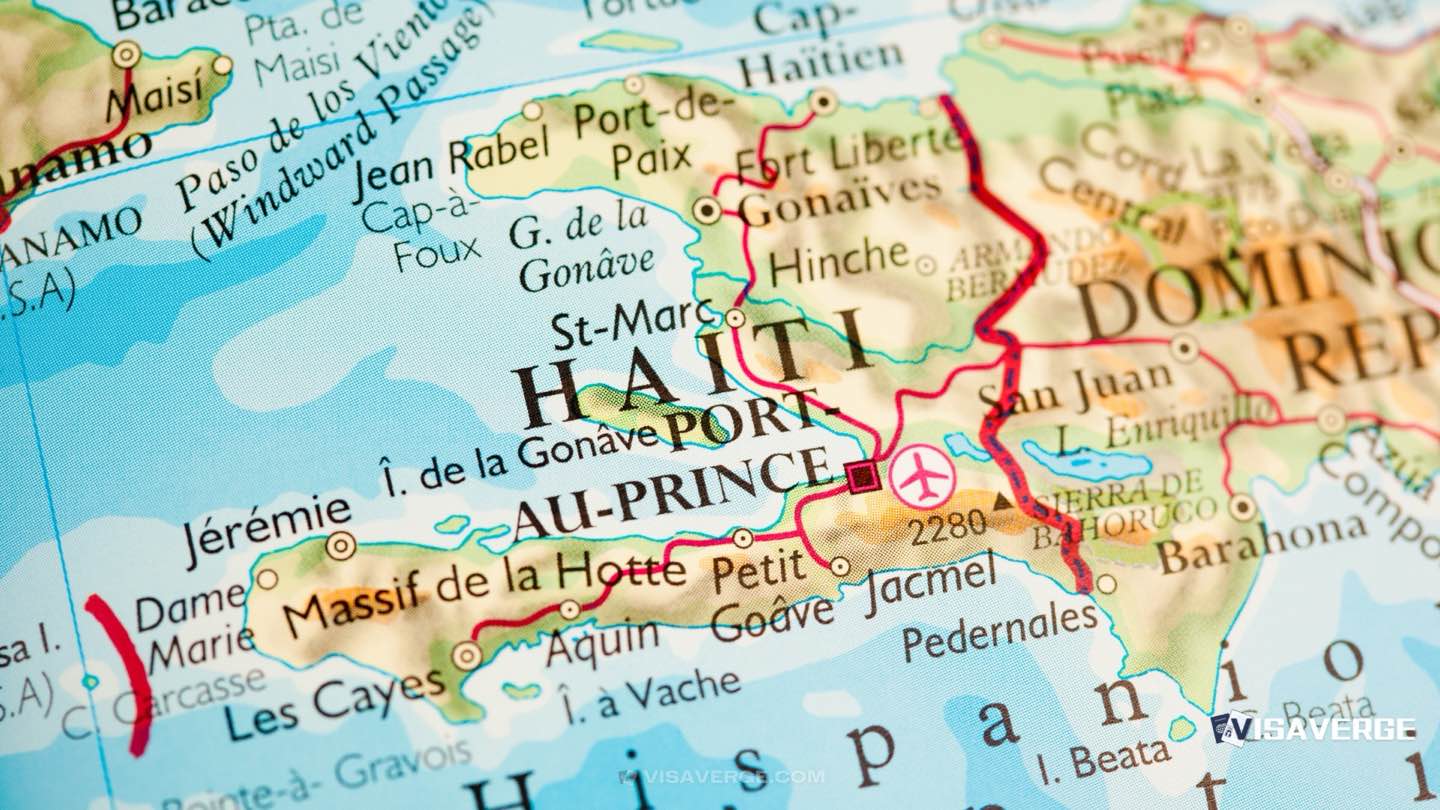
(HAITI) Haiti now allows visa-free entry for most travelers for stays of up to 90 days, but a short list of nationalities must secure a visa before departure. Every visitor still needs the right passport, health paperwork, and arrival fees to avoid being turned back at the airport.
For families visiting relatives, aid workers rotating into projects, and tourists heading to Port-au-Prince markets or the hilltop fortress of Citadelle Laferrière, the rules matter most at two moments: boarding your flight and passing immigration on arrival.
Free toolDS-160 Form Filling Online Helper ToolAccording to analysis by VisaVerge.com, confusion persists because older travel blogs still describe Haiti as “visa-required” by default, even though Haitian authorities have clarified broad short-stay exemptions through early 2026.
Two big questions to start with
First, check whether your passport lets you enter without a visa.
Second, decide whether your stay will end within 90 days, because longer stays trigger a separate residence permit system run by Haiti’s Department of Immigration and Emigration (DIE).
Visa-free travelers: what to prepare before you fly
If you hold a passport from the United States ??, Canada ??, the Schengen area, or most other countries, Haiti grants visa-free entry for tourism or short business visits. The limit is 90 days on each visit, assuming you meet standard entry checks.
Airlines and border officers usually focus on four items:
- Passport validity: at least six months beyond arrival, with one blank page for stamps.
- Arrival fee: $10 for the airport tourist card, paid on arrival.
- Health rule: travelers aged 12 and over must show full COVID-19 vaccination or a negative test, if those checks are in force at the time of travel.
- Proof of onward travel: carry a round-trip ticket or booking confirmation; officers can ask how you’ll leave before your 90 days end.
Bring copies on paper and on your phone. Power cuts and weak data signals happen, and a clear printout often solves a problem faster than a long explanation.
Travelers who must get a visa before departure
Haiti requires a pre-arranged visitor or tourist visa for nationals of:
- Dominican Republic
- Panama
- Colombia
- Cuba
- Syria
- Libya
- Iran
- Vietnam
- Yemen
If you’re in one of these groups, plan the embassy visit early—you can’t fix this at the airport. Haitian embassies advise applying at least one month in advance, with published processing ranges of 1–4 weeks.
| Country/Type | Visa Category | Processing Time |
|---|---|---|
| Haiti | Pre-arranged visitor/tourist visa (visa-required nationalities) | 1–4 weeks |
| Haiti | Visa-free short stay (tourism/business) | 90 days |
| Haiti | Residence permit — medical certificate validity | 30 days |
| Haiti | Residence permit — criminal record lookback period | 10 years |
| Haiti | Residence permit validity year (permit cycle) | October 1 through September 30 |
| United States (policy context) | TPS registration closed date (affecting Haitian nationals) | Registrations closed on August 3, 2025 |
- The standard tourist visa is valid for 3 months, single entry.
- The fee is $25, commonly paid by money order or certified check to the Embassy of Haiti.
The 5-step visa application journey (for visa-required passports)
- Get the consular application form and read the checklist twice.
- Assemble core documents: passport, two photos, and a short letter explaining your trip with a Haitian contact, host, or hotel details.
- Add travel and work proof: round-trip ticket copy and an employer letter to show ties to your home country.
- Submit the packet to the nearest Haitian embassy or consulate, pay the $25 fee, and keep your receipt (payment is non-refundable).
- Collect your passport when notified, and travel with the same documents you filed—border officers can still ask for them on arrival.
Most delays come from missing paperwork. Haitian embassy figures put 80% of delays down to incomplete files. Small details matter, including photo size and signatures, so treat the checklist like a contract.
Arrival in Haiti: what immigration officers check
On arrival you will:
- Present your passport and, if required, your visa.
- Pay the $10 tourist card fee.
- Answer basic questions about where you’ll stay and how long you’ll remain.
If you’re traveling for a conference or short-term work, carry invitation letters in your hand luggage. Visa-free status does not prevent officers from verifying that your activities match a visitor stay.
Staying longer than 90 days: residence permit rules
Once you pass 90 days, Haiti treats you as a longer-term resident and expects an annual Residence Permit.
- A 2012 notice from the Ministry of Interior (still enforced in 2026) ties the permit year to October 1 through September 30.
- The Department of Immigration and Emigration (DIE) issues these permits.
- Penalties for ignoring the rule are in Haiti’s 1978 Immigration Law, including fines and deportation under Articles 305, 313, and 315.
- NGOs and businesses must secure permits for foreign staff before hiring.
The 4-step residence permit process at DIE
- Gather identity and entry documents: passport bio page and a copy of the entry stamp.
- Add supporting records: a medical certificate issued within 30 days, a criminal record covering the past 10 years, and a birth certificate with a French translation.
- Meet financial conditions: proof of an HTG 7,500 bank deposit and payment of an HTG 5,000 fee, plus a request letter and, when relevant, an employer letter.
- Submit your packet to DIE in Port-au-Prince before your lawful stay expires, and keep copies since follow-up visits are common.
Extensions of a visitor stay also go through DIE and should be requested before your time runs out. Overstays raise the risk of fines or removal, and an expired status is hard to repair after the fact.
Health and security checks to plan for in 2026
Health rules remain part of entry screening, with full COVID-19 vaccination for travelers aged 12 and over or a negative test listed as the standard. Carry the card or lab result in the same folder as your passport.
Security conditions also affect travel planning. The U.S. Department of State lists Haiti under a “Do Not Travel” advisory for crime and kidnapping. Read the latest details on the U.S. State Department’s Haiti travel advisory page: https://travel.state.gov/content/travel/en/traveladvisories/traveladvisories/haiti-travel-advisory.html
Important: check health and security advisories before booking, and carry all health documentation with your passport.
U.S. policy shifts affecting travel patterns
Separate from Haiti’s entry rules, U.S. policy changes are reshaping travel and migration flows:
- A U.S. travel ban list effective January 1, 2026 includes Haiti (alongside Afghanistan, Iran, Myanmar, Chad, and Eritrea), raising scrutiny for Haitian nationals seeking U.S. visas.
- Temporary Protected Status (TPS) for Haitians in the United States ends February 3, 2026, after registrations closed on August 3, 2025, affecting ~100,000+ people. This end date pushes some families toward travel back to Haiti or to longer-term status planning.
Practical checklists for common trips
A smooth arrival often comes down to packing your documents as carefully as your clothes. Use these quick checklists for three common visitor profiles, and adjust them to match your nationality and purpose.
- Tourist on visa-free entry (up to 90 days):
- Passport (valid 6+ months), $10 fee money, proof of hotel or host, and return ticket.
-
Visitor who needs a visa:
-
All items above, plus two photos, employer letter, trip explanation letter, and the issued visa in your passport.
-
Longer stay (over 90 days):
- Start a DIE permit file early, keep French translations ready, and budget for the HTG 7,500 deposit and HTG 5,000 fee.
Table — Quick reference for fees and documents
| Purpose | Key fee(s) | Key documents |
|---|---|---|
| Short stay (≤90 days) | $10 tourist card | Passport, proof of onward travel, vaccination/negative test |
| Pre-arranged tourist visa | $25 embassy fee | Passport, two photos, letter of trip, employer letter |
| Residence permit | HTG 5,000 fee + HTG 7,500 deposit | Passport bio & entry stamp, medical cert, criminal record, birth cert (Fr.) |
One last warning: Haiti does not run an official e-visa system, even if third-party sites suggest otherwise. Use embassies and consulates for applications, and keep your entry stamp legible—it anchors every later extension or permit request.
When you plan a day trip to Citadelle Laferrière, carry a copy of your passport ID page and leave the original secured at your lodging. Keep your phone charged and copies of your documents handy.
Haiti allows most international travelers to visit for 90 days without a visa, provided they have a valid passport and pay a $10 fee. However, a select group of nationalities must apply at embassies beforehand. Stays longer than 90 days require a residency permit. Travelers must navigate complex health requirements and significant security warnings while ensuring all documentation is printed for offline access.