January 3, 2026
- Added ETIAS requirement coming into effect in Q4 2026 for visa‑exempt travelers
- Updated Schengen short‑stay rule explicitly to 90 days in any 180‑day period
- Included realistic timing: Schengen decisions 15–45 days, MVV weeks–months, and application windows
- Added specific fees: Schengen €80 adults/€40 children 6–12, MVV fees typically €210–€350
- Expanded Working Holiday section with 2026 eligible countries, age limits, and documentation requirements
- Clarified post‑arrival actions: register within 5 days for BSN and MVV residence‑permit collection timing
(NETHERLANDS) From Q4 2026, most visa‑free visitors to the Netherlands will need an approved ETIAS travel authorization before boarding. For longer stays, the rules remain strict: over 90 days usually means an MVV entry visa and a residence permit issued through the Dutch Immigration and Naturalisation Service (IND).

That split matters for tourists, students, families, and young adults eyeing a Working Holiday year. The fastest applications are the ones that match the correct track, meet the passport and insurance rules, and arrive with complete documents.
Free toolSchengen Short-Stay Visa CalculatorDecide whether your trip is “90 days” or “more than 90 days”
The Netherlands applies the Schengen rule for short stays: up to 90 days in any 180‑day period for tourism, business, short study, or family visits. A Schengen visa issued by the Netherlands lets you move around the 27‑country Schengen area during its validity, but the Netherlands must be your main destination or first entry.
Stays longer than 90 days fall into the long‑stay system. Most applicants first need a residence permit decision from the IND, and then collect an MVV (Authorisation for Temporary Stay) sticker from a Dutch embassy or consulate.
A practical first action is to run your nationality and purpose through the Dutch government’s [NetherlandsWorldwide visa requirement checker and checklists]. It also helps you confirm where to apply if your country uses an external service center.
The documents that decide most outcomes
Dutch decision makers look for two things: a lawful reason to enter and proof you will follow the terms of stay. For both Schengen and MVV paths, the same basics repeatedly decide approvals.
Bring a passport that meets all of these points:
– Valid at least 3 months after your planned departure
– Issued within the last 10 years
– At least 2 blank pages
– Signed and in good condition
Applicants also need proof that the trip is affordable and well planned. Expect to show:
– Accommodation covering the full stay (hotel bookings or a host’s invitation)
– An itinerary that fits your purpose, especially for business travel
– Bank statements, often covering 3 months, plus payslips or an employer letter
Health coverage is not optional for Schengen travel. You must hold travel medical insurance with at least €30,000 coverage for medical costs and repatriation, valid across all Schengen states.
For children, add parental consent and custody papers when relevant. If one parent will not attend, notarized consent is often required. Many civil documents must be legalized or apostilled and translated into Dutch, English, French, or German by a sworn translator.
A five‑stage application journey, with realistic timing
Most applicants do best by treating the process like a short project with deadlines. The Netherlands generally allows Schengen applications from 6 months to 45 days before travel, and 9 months for seafarers.
- Choose the track and collect the right checklist. Confirm whether you need a Schengen visa, an MVV, or neither, and check for special lanes (e.g., Schengen facilitation for family members of EU/EEA/Swiss nationals).
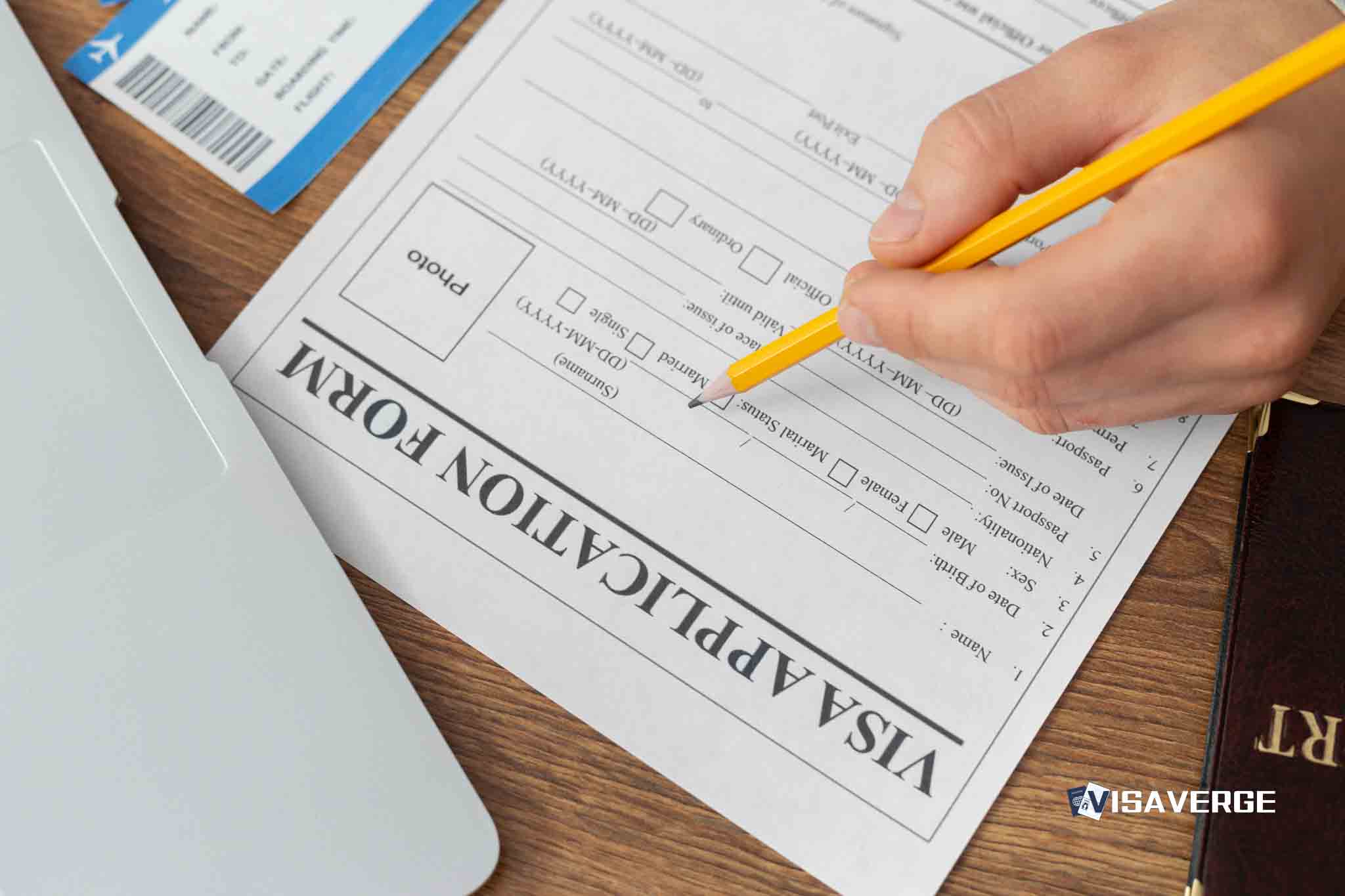
- Complete the online form and print the final version. The Schengen form produces a unique code. Babies and children need their own form too.
- Book the appointment early. In busy months (July–August and December–January), appointment slots and processing times tighten. For a Working Holiday plan, booking months ahead is normal.
- Attend in person for biometrics and submission. Submit originals and copies, give fingerprints and a photo, and sign declarations. Fingerprints are stored for 5 years in the Schengen Visa Information System.
- Wait, then collect your passport and check the sticker. Typical Schengen decisions take 15 to 45 days, while MVV and residence permits can take weeks to months.
Fees are set and non‑refundable:
– Schengen visa: €80 for adults, €40 for children aged 6–12, free for children under 6
– MVV-related fees: vary by permit type, typically in the €210–€350 range
Key timing note: treat the application like a mini‑project. Start early, track deadlines, and avoid last‑minute appointments.
ETIAS in Q4 2026: a new pre‑travel step for visa‑exempt travelers
ETIAS changes the pre‑travel routine for many nationals who currently enter without a visa, including travelers from the United States, the United Kingdom, and Canada. Instead of showing up at the airport with only a passport, you will submit an online authorization request in advance.
- The application asks for personal data and travel details, then checks security databases.
- Processing is designed to take minutes for many applicants; approval links electronically to the passport.
- ETIAS does not collect biometrics.
- Once issued, ETIAS is valid for 3 years and supports multiple entries, as long as the passport stays valid.
| Country/Type | Visa Category | Processing Time |
|---|---|---|
| Netherlands (Schengen) | Short-stay Schengen visa decision | 15 to 45 days |
| Netherlands (Schengen) | Schengen application submission window (general) | from 6 months to 45 days before travel |
| Netherlands (Schengen) | Schengen application submission window (seafarers) | 9 months before travel |
| Netherlands | MVV and residence permits | weeks to months |
| Netherlands | MVV holder — residence permit card availability after reporting to IND | 2–3 weeks |
| Netherlands | Municipality registration for long-stay visitors (BSN) | within 5 days of arrival |
| ETIAS (for visa-free travellers to Netherlands) | ETIAS processing/approval | minutes for many applicants |
| ETIAS (for visa-free travellers to Netherlands) | ETIAS validity | 3 years |
ETIAS does not replace a visa for people who already need one. It also does not change the 90/180 day limit, so frequent visitors still need to track their days carefully.
According to analysis by VisaVerge.com, the biggest practical impact will be on last‑minute travel, because the “visa‑free” label will no longer mean “no paperwork.”
Working Holiday: what “cultural exchange first” means in practice
The Netherlands’ Working Holiday route is a long‑stay option designed for young adults who want a year of travel with limited work. In 2026, the program covers nationals of:
– Australia, Canada, New Zealand, South Korea, Hong Kong, Argentina, Uruguay, Taiwan, and Japan
Age rules:
– Standard window: 18–30
– Extended to up to 35 for some nationalities (for example, Canada)
Authorities expect the main goal to be cultural exchange, with work as a secondary way to support the stay.
A strong Working Holiday file usually includes:
– Proof of funds for the first phase of the stay
– A return ticket, or enough funds to buy one
– Health insurance for the full period
– A plan that reads like travel, not a full‑time job offer
– No dependents (the route does not allow bringing children)
Applicants should prepare for extra checks on ties and intentions, as officials have tightened scrutiny. The IND has reported that incomplete applications drive many refusals during peak periods.
After you land: the first five days can decide your first month
Short‑stay visitors generally do not register with a municipality. Your passport stamp and your travel documents carry the legal time limit.
Long‑stay visitors have an early checklist. Within 5 days, you must register at the municipality to receive a BSN (Citizen Service Number). The BSN unlocks work, banking, and health care—many employers will not start payroll without it.
- MVV holders should report to the IND to collect the residence permit card, often available within 2–3 weeks. Bring your passport and proof of address, and keep copies of everything.
- If your residence document is lost, stolen, or expires while you are abroad, the Netherlands can issue an entry visa to let you return and sort the paperwork.
Some nationalities face a tuberculosis test requirement after arrival, and many family‑based MVV applicants must pass a civic integration exam abroad before travel. Students and children are often exempt, but families should check because exam slots can be tight.
Common problems that delay decisions, and how to avoid them
Most Dutch visa delays come from avoidable gaps. The fastest fix is ruthless document hygiene. Pay attention to these frequent failure points:
- A passport that does not meet the 10‑year issuance rule
- Insurance valid only for the Netherlands, not the whole Schengen area
- Bank statements that do not match claimed income or trip length
- Missing signatures, missing photocopies, or untranslated civil documents
- Booking an appointment too late, then needing to move travel dates forward
Practical takeaway: match your application to the correct track, verify every document against the checklist, and allow ample time for appointments and processing.
This guide outlines the evolving Dutch entry requirements, highlighting the 2026 ETIAS launch for visa-free travelers. It distinguishes between short-stay Schengen rules and long-stay MVV processes. Key focus areas include strict passport validity, mandatory €30,000 health insurance, and the necessity of the BSN for residents. Specialized tracks like the Working Holiday program are detailed for young adults from select partner nations.