


1 earlier update
- The Fourteenth Amendment guarantees citizenship to children born on U.S. soil regardless of parental status.
- Supreme Court precedent in Wong Kim Ark remains the central legal anchor for birthright citizenship.
- Narrow exceptions exist for children of foreign diplomats or those born during hostile occupation.
(UNITED STATES) Birthright citizenship remains the rule in the United States, and the legal standard still comes from the Fourteenth Amendment. Children born on U.S. soil are citizens at birth, except for narrow exceptions such as children of diplomats and births during hostile occupation.

That rule matters for families, hospitals, schools, and later immigration filings. It also matters in 2026 because political fights over birthright citizenship have continued, even as the constitutional text and Supreme Court precedent still point in the same direction.
Birthright citizenship is also called jus soli, Latin for “right of the soil.” place of birth controls citizenship. That is different from jus sanguinis, or citizenship by bloodline, where a child inherits citizenship from a parent.
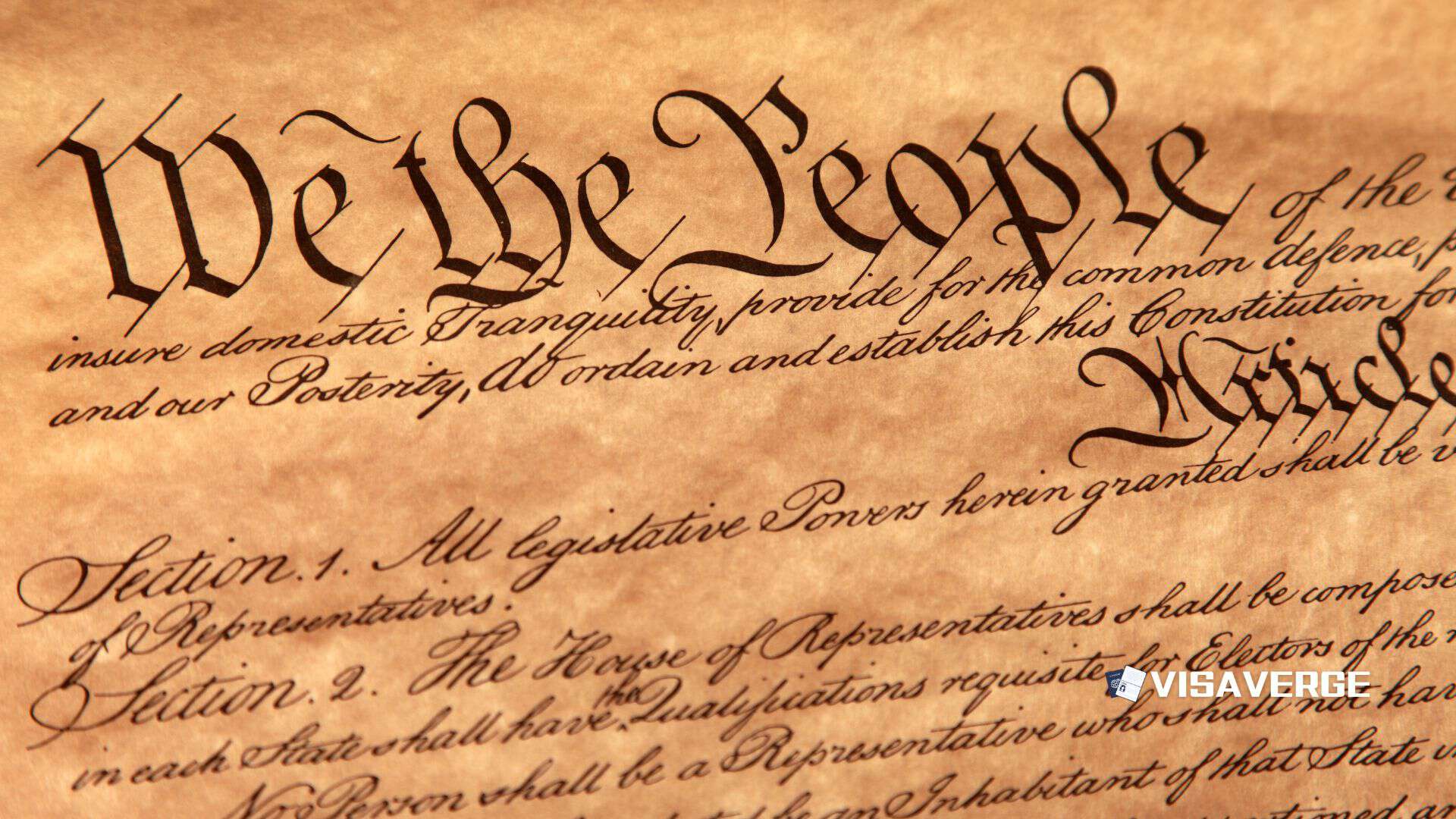
The U.S. rule is rooted in the Fourteenth Amendment, ratified in 1868. The Citizenship Clause says: “All persons born or naturalized in the United States, and subject to the jurisdiction thereof, are citizens of the United States and of the State wherein they reside.” The clause was written to overturn Dred Scott v. Sandford, which denied citizenship to Black Americans.
The constitutional rule that still governs
For most children born in the United States ??, the answer is simple. If birth happens on U.S. soil, the child is a citizen at birth. Parents’ immigration status does not change that rule. A child born to a tourist, a student, a worker, an undocumented parent, or a lawful permanent resident is treated the same under the Constitution.
The Supreme Court reinforced that reading in United States v. Wong Kim Ark in 1898. The Court held that a child born in San Francisco to Chinese parents was a U.S. citizen by birth. That case has remained the central judicial anchor for birthright citizenship ever since.
Legal scholars and federal courts have repeatedly treated Wong Kim Ark as controlling law. That is why attempts to narrow citizenship by executive order or agency policy run into immediate constitutional problems. According to analysis by VisaVerge.com, the doctrine remains one of the most durable parts of U.S. citizenship law.
The narrow exceptions that still exist
The phrase “subject to the jurisdiction thereof” is not empty language. It creates a small set of exceptions. The clearest example is children born to foreign diplomats who enjoy diplomatic immunity. Those children are not considered fully under U.S. jurisdiction at birth.
A second exception applies to births during hostile occupation. That situation is rare in modern practice, but it has long been recognized in legal writing and historical discussion. Outside those narrow categories, the rule applies broadly.
That is why common statements such as “birthright citizenship applies to everyone, without exception” are wrong. The Constitution creates a broad rule, not an unlimited one.
Recent political fights and court pushback
Birthright citizenship returned to the center of politics in 2025, when President Trump issued an executive order seeking to end automatic citizenship for children of undocumented immigrants and for children of parents with temporary status. The order said children born in the United States to parents who were not citizens or lawful permanent residents would not be citizens.
Federal judges in Maryland, Washington, and Massachusetts quickly blocked the order with preliminary injunctions. Those rulings said the measure conflicted with the Constitution’s long-standing meaning. The court actions showed a familiar pattern: executive efforts to narrow birthright citizenship collide with the Fourteenth Amendment and with more than a century of precedent.
That legal history matters to families now. A birth certificate remains the basic proof of U.S. citizenship for children born in the country. Hospitals issue the records, states maintain them, and federal agencies accept them as core evidence of citizenship.
Common myths that keep spreading
One myth says the United States is the only country with birthright citizenship. That is false. Many countries in the Americas use jus soli in some form, though rules differ from place to place. Some countries have kept broad birthright rules. Others have narrowed them.
Another myth says birthright citizenship encourages illegal immigration. The record cited in legal and policy debates does not show a clear link. The child’s citizenship is not a reward for a parent’s crossing. It is a constitutional status assigned at birth.
A third myth says birthright citizenship is easy to revoke. It is not. Because the rule sits in the Constitution, changing it would require far more than a new executive order. A constitutional amendment would be the cleanest route, and that is an extremely difficult process.
A fourth myth says birthright citizenship is new. It is not. Its roots reach back to English common law and older Roman legal ideas. In the American setting, the Fourteenth Amendment made it explicit after the Civil War.
How families usually prove the status
For children born in the United States, proof of citizenship usually starts with a state-issued birth certificate. In later life, that record is used for a U.S. passport, school enrollment, work eligibility, and many other routines tied to citizenship.
Parents do not need to file a special citizenship application for a child born on U.S. soil. The status attaches at birth, so the government does not treat it like a benefit that must be approved later.
That simplicity is one reason birthright citizenship has stayed so durable. It keeps the law clear, reduces paperwork, and lowers the risk that children grow up without a recognized nationality.
Why the rule still shapes public life
Supporters of birthright citizenship argue that it prevents a hereditary underclass, limits statelessness, and keeps citizenship tied to a neutral rule instead of race or ancestry. They also say it helps first-generation children join civic and economic life from the start.
Critics argue that the rule draws families to the United States and can be abused through birth tourism. They also say citizenship should depend on parental ties, not location alone. Those arguments have influenced politics for decades, but they have not displaced the constitutional rule.
For readers trying to separate rhetoric from law, the main point is clear. In the United States, birthright citizenship under jus soli is still the baseline rule. The exceptions are narrow, the case law is old, and the most recent political attacks have met immediate judicial resistance.
Quick answers readers ask most often
Does a child born in the United States automatically become a citizen? Yes, unless one of the narrow exceptions applies.
Do undocumented parents change the rule? No. Parental immigration status does not defeat citizenship at birth.
Does the child need to apply for citizenship later? No. The child is already a citizen at birth.
Can an executive order erase birthright citizenship? No. That would collide with the Fourteenth Amendment and existing Supreme Court precedent.
Where can readers see the constitutional text? The official text of the Fourteenth Amendment remains the core legal reference.
In practice, birthright citizenship remains one of the clearest rules in U.S. constitutional law, even as political campaigns keep testing its limits. The debate is about policy and power. The rule itself still rests on the Constitution, the courts, and a history that has shaped the United States for more than 150 years.






When the Nazis sent the Jews to concentration camps it was under the guise of “deportation”. How were Jews deported from their own country? Their citizenship was taken away. Citizenship based on anything other than birthright can be taken away by politicians.