- Trump’s executive order has expanded deportation and detention operations across the entire United States in 2026.
- New vetting rules require public social media profiles for H-1B and H-4 visa applicants under strict scrutiny.
- Proposed labor regulations would increase entry-level wages by 33% for foreign workers in various categories.
(UNITED STATES) — President Trump’s “Protecting the American People Against Invasion” executive order has reshaped immigration enforcement across the United States since he issued it on January 20, 2025, expanding detention, deportations, travel restrictions and screening measures by April 2026.

Fifteen months after Trump signed the executive order, federal agencies have moved from initial rollout to broad enforcement, with stricter workplace operations, wider federal-state cooperation and new screening rules affecting immigrants, employers and lawful permanent residents.
Courts have also started testing parts of that agenda. In early April 2026, a federal judge in Boston ruled that the Trump administration violated the law when it ended the immigration status of nearly 900,000 individuals.
The executive order revoked Executive Orders 13993 and 14012 from 2021 and replaced them with a system centered on immigration enforcement, expanded detention capacity and expedited deportations. Agencies have since built that framework into day-to-day operations.
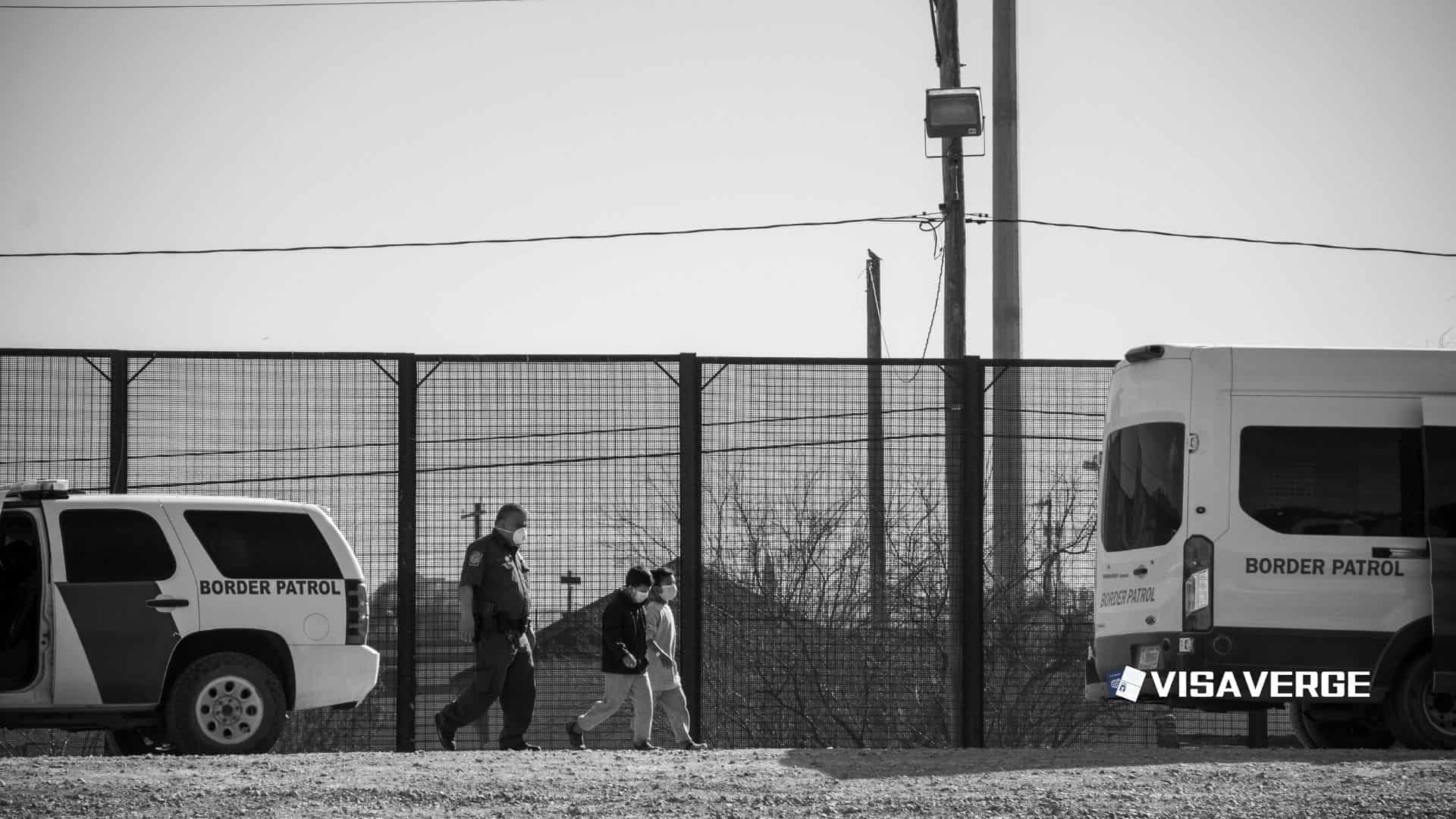
Homeland Security Task Forces now operate in every state under the directive. Those task forces target transnational criminal organizations, human trafficking networks, foreign gangs and cross-border smuggling, with participation from federal, state and local law enforcement agencies.
The administration has also pursued aggressive removal operations. Workplace immigration raids expanded significantly in mid-2025, although business concerns may be pushing the administration to recalibrate that approach.
Travel restrictions have widened sharply this year. Since January 1, 2026, the administration has imposed expanded restrictions affecting nationals of 39 countries, while also restricting immigrant visa approvals for people from 75 countries.
Those measures grew out of an earlier action in June 2025, when Trump restricted nationals from 19 countries from entering the United States. By some estimates, the suspension of immigrant visa approvals for 75 countries will block approximately half of all legal immigration to the United States.
That policy faces a challenge in the Southern District of New York. Screening decisions tied to those restrictions now go beyond passport nationality and also consider country of birth, dual nationality, prior long-term residence abroad and recent travel history.
The State Department widened vetting further on December 3, 2025, when it expanded its “online presence review” requirement to H-1B workers and H-4 dependents. Applicants must disclose social media identifiers and keep their accounts set to public visibility during visa adjudication.
That requirement had previously applied mainly to F, M and J visa categories. Two days later, on December 5, U.S. Citizenship and Immigration Services announced a new USCIS Vetting Center to “centralize the enhanced vetting” of applicants, with responsibility for screening terrorists, criminal aliens, and other foreign nationals who may pose threats to public safety or who have engaged in fraud or other criminal activity.
Border screening has widened as well. The Department of Homeland Security announced on November 20, 2025, that it would expand its Biometric Entry/Exit program, and the Final Rule took effect on December 26, 2025.
That rule gives DHS and Customs and Border Protection broader authority to collect facial biometrics and related biometrics from non-U.S. citizens entering and departing the country at airports, land ports, seaports and other authorized points of departure. Combined with the travel restrictions and social media vetting, the changes have created a layered screening system for foreign nationals seeking to enter or remain in the country.
Employment-based immigration has also changed. Beginning in 2025, the administration imposed a $100,000 fee for new H-1B petitions for workers located outside the United States and replaced the random lottery with a system that favors higher-wage positions.
That shift has raised costs for employers recruiting foreign workers, especially for entry-level and mid-career roles. As of April 2026, the Department of Labor has proposed a broader overhaul of prevailing wage requirements for H-1B and other foreign worker programs, including H-1B1, E-3 and PERM categories.
The proposal would raise wage thresholds across all four tiers, with entry-level salaries increasing by approximately 33%. The Department of Labor argues that the current system undervalues foreign workers and may undercut U.S. wages.
The proposed rule remains open for public comment for 60 days. Together with the $100,000 filing fee for offshore workers, the wage changes have altered the economics of foreign worker sponsorship.
USCIS also tightened rules for work authorization. On December 4, 2025, the agency announced enhanced screening measures across several benefit categories and cut the maximum validity period for certain Employment Authorization Documents to 18 months.
That change increases the frequency of renewals and raises the risk of work gaps if filings are delayed. Employers also face more frequent reverification of I-9 forms and higher compliance demands.
Lawful permanent residents face closer scrutiny too. Green card holders in 2026 now confront new travel screening, increased background checks, Small Business Administration loan restrictions, refugee re-screening policies and stricter enforcement for conditional green card holders.
Those steps have changed conditions for people who already hold lawful permanent resident status. The new measures affect travel, business financing and the treatment of those who received humanitarian protection or conditional permanent residence.
Even with that tougher enforcement climate, the April 2026 Visa Bulletin brought movement in several employment-based categories. EB-2 Final Action Dates became current in April for all countries except China and India, and the Dates for Filing for the EB-3 Professional & Skilled Worker category became current for all countries except China, India, and Philippines.
For EB-2 applicants, the category for the Rest of the World, Mexico, and the Philippines became “Current” for final action dates. India EB-2 advanced sharply, with the Dates for Filing moving to January 15, 2015, and the Final Action date moving to July 15, 2014.
USCIS has also confirmed that it will continue to accept adjustment of status applications based on the “Dates for Filing” chart for the sixth consecutive month. That allows eligible applicants to file `Form I-485` while their underlying petitions are processed.
Family-sponsored categories also moved. In the April 2026 Visa Bulletin, the F-2B category and the F-3 category both advanced by an average of four to five months, showing movement in older family visa backlogs.
Deportation policy has widened beyond returns to countries of origin. As of April 2026, Costa Rica has agreed to receive up to 25 deported migrants per week from the United States, part of the administration’s push to send people to “third countries.”
The executive order also kept pressure on what it calls recalcitrant countries. It authorizes the Secretary of Homeland Security and the Secretary of State to use sanctions under Section 243(d) of the INA, including visa restrictions and other diplomatic steps, to push compliance with deportation requests.
Legal challenges continue to build around the broader agenda. In April 2026, the Supreme Court is scheduled to hear oral arguments on the administration’s effort to end birthright citizenship for those born to parents who are present in the U.S. illegally.
A separate executive order signed by Trump to tighten citizenship verification in federal elections is also expected to face legal challenges. The measure directs agencies to create a national database of U.S. citizens and adds new rules for mail-in ballots.
Democrats have already filed a lawsuit to block that order, arguing that it exceeds presidential authority. Experts have warned that the system could create confusion for naturalized citizens, who are more likely to face errors in federal records used to verify voter eligibility.
The administration’s crackdown has extended beyond illegal immigration. More than 100,000 student and worker visas were revoked in 2025, and Temporary Protected Status and humanitarian parole were canceled or revoked for over 1.5 million people.
In January 2026, the Department of State also announced that it was pausing immigrant visa processing for an additional 75 countries. Those steps narrowed legal immigration pathways alongside the broader immigration enforcement campaign.
Congress has been fighting over how to fund that effort. Republican leaders, including John Thune and Mike Johnson, have pursued a two-step plan to resolve the Department of Homeland Security funding impasse by passing a short-term bill and then a longer-term measure funding immigration enforcement and border security.
That standoff, driven by disputes over immigration enforcement limits, left some DHS workers unpaid for weeks. Trump has called for a deal by June 1.
At the same time, some lawmakers have pushed alternatives. Bipartisan groups, including lawmakers who generally support more restrictive measures, have proposed exempting healthcare workers from the H-1B fee and expanding the availability of H-2A visas.
The administration has also proposed changes to the H-2A program to address farm labor shortages and has shown openness to changing some ICE tactics. Those moves reflect tension between the executive order’s hardline enforcement goals and concerns from employers and industries that rely on immigrant labor.
That tension is visible across the system. Employers face the $100,000 H-1B filing fee for offshore workers, possible wage increases of 33% for entry-level positions and more I-9 reverification burdens, while immigrants confront expanded vetting, shorter work authorization periods and more travel scrutiny.
Students and exchange visitors now face broader social media review. Green card holders face tighter checks at ports of entry and limits on some federal business lending.
The administration’s first full year of implementing Protecting the American People Against Invasion has produced a broad reordering of immigration policy, but not without pushback from courts, Congress and businesses. While visa bulletin movement shows that parts of the legal immigration system still function, the combination of visa revocations, country restrictions, biometric collection and expanded deportation tools has created a far more restrictive system for people seeking to enter or remain in the United States.